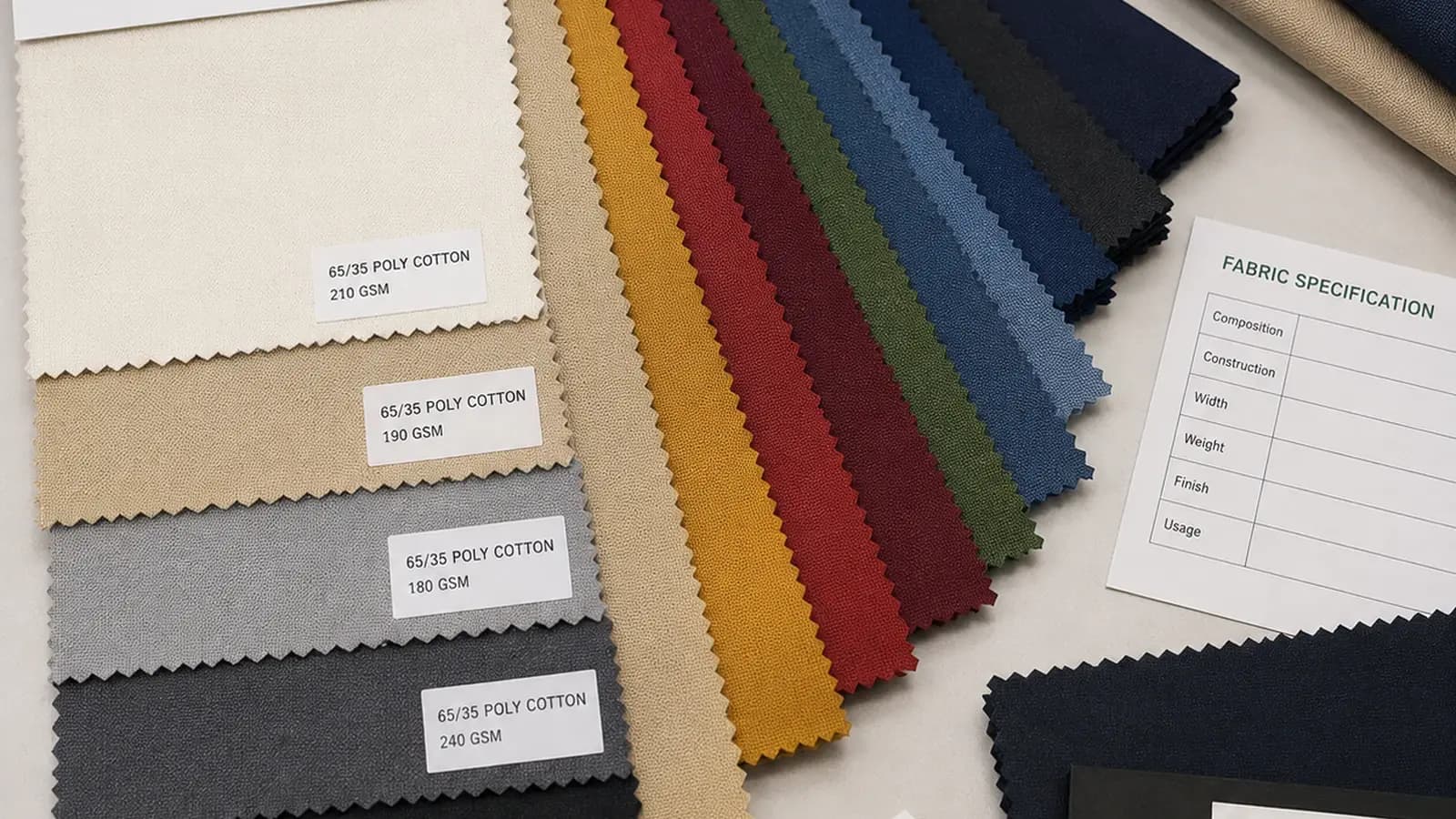
Fabric library
Options presented against the requirement, with the commercial consequence of each attached.
Product development
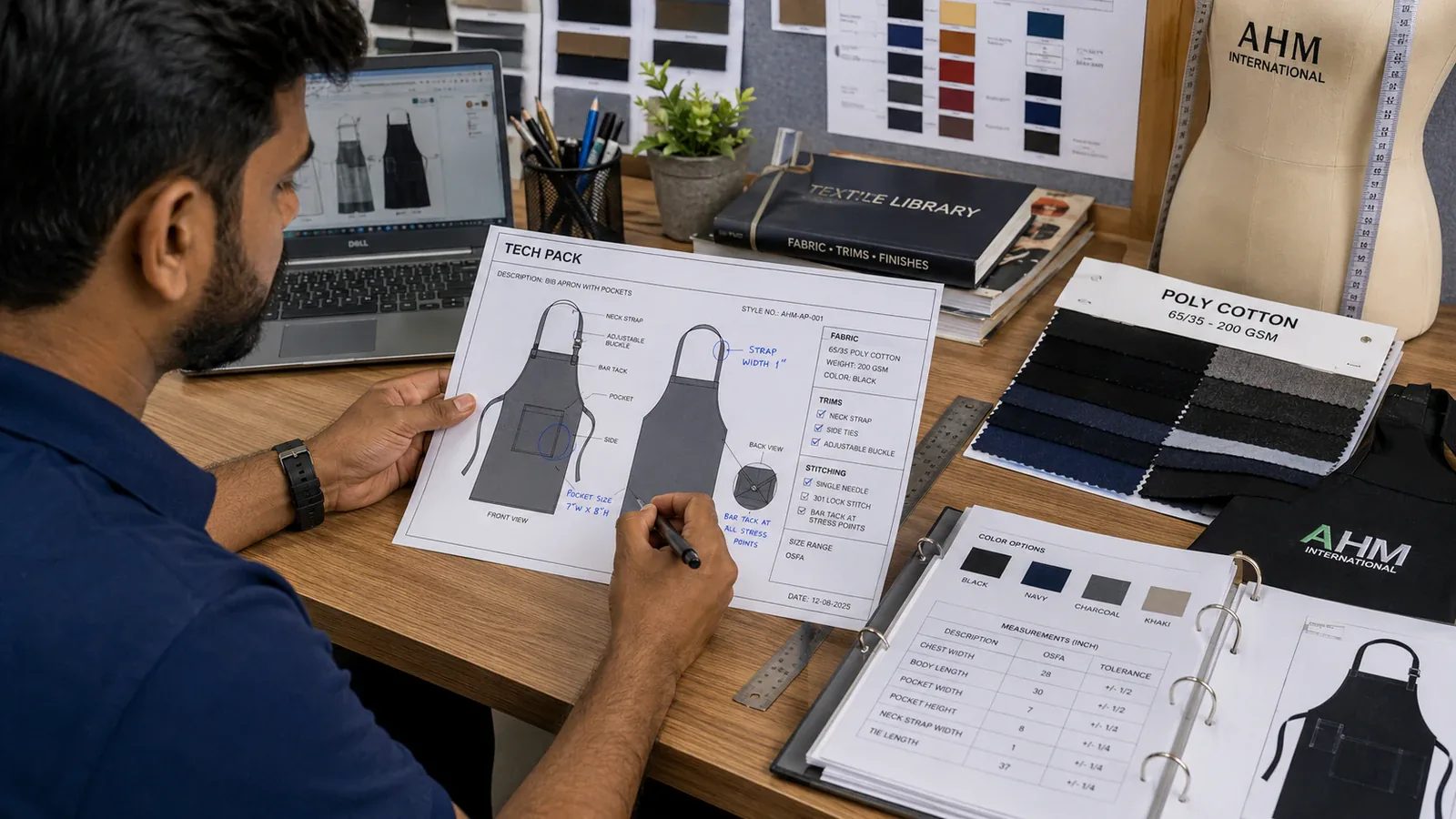
Almost every avoidable cost in an apparel order is created or prevented before anything is cut. This is how AHM turns what you send into a specification the factory floor and your QA read the same way.
Development
Ten stages between a specification arriving and a container leaving. Every one of them has a defined output and a point where you approve something.
01
We review the specification, reference garment or sketch and come back with the questions that would otherwise surface as a failed first sample.
You supplyTech pack, reference garment, sketch or written requirement
02
Materials are matched to the requirement and presented with the commercial consequence of each option attached.
You supplyApproval of fabric direction, or a nominated supplier
03
FOB costing is built against the confirmed construction, materials, decoration, packing and quantity.
You supplyTarget quantity, destination and target price if you have one
04
Proto and fit samples are produced against the specification, with a written comment sheet at every round.
You supplySample comments and measurement feedback
05
Fit, measurements, colour and decoration are approved and locked as the reference for bulk.
You supplyWritten approval of the sealed sample
06
Materials are inspected, the marker is finalised, and a pre-production sample confirms bulk materials and construction.
You supplyPP sample approval
07
Cutting and assembly run to the approved construction, with inline checks at defined operations.
You supplyNothing: you receive production status
08
Inspection covers measurement, construction, appearance, decoration and labelling against the approved standard.
You supplyThird-party inspection booking, if your program requires one
09
Garments are folded or hung, polybagged, ratio- or solid-packed and cartoned to your packing instruction.
You supplyPacking instruction and carton marking artwork
10
Commercial documentation is prepared, cartons are marked, and the shipment is coordinated to FOB handover at Port Qasim.
You supplyNominated forwarder and shipping instructions
Most cost problems in apparel are decided before anything is cut.
A vague specification gets quoted defensively, sampled twice and corrected in bulk. A resolved one gets quoted accurately the first time. Development is where that difference is made, and it is the cheapest place to make it.
What you receive
Options presented against the requirement, with the commercial consequence of each attached.
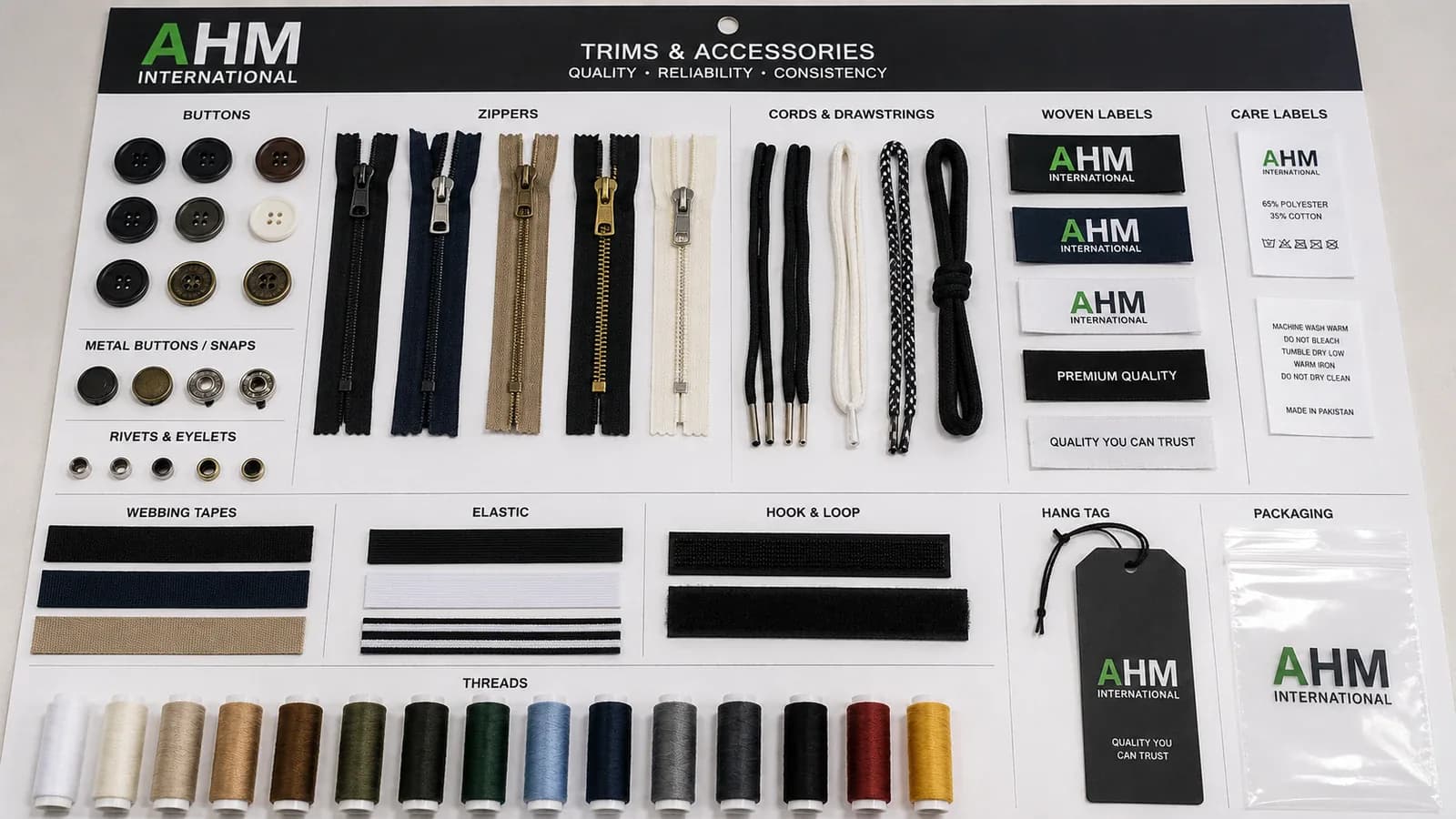
Buttons, zips, drawcords, elastics and labels sourced to an approved reference.
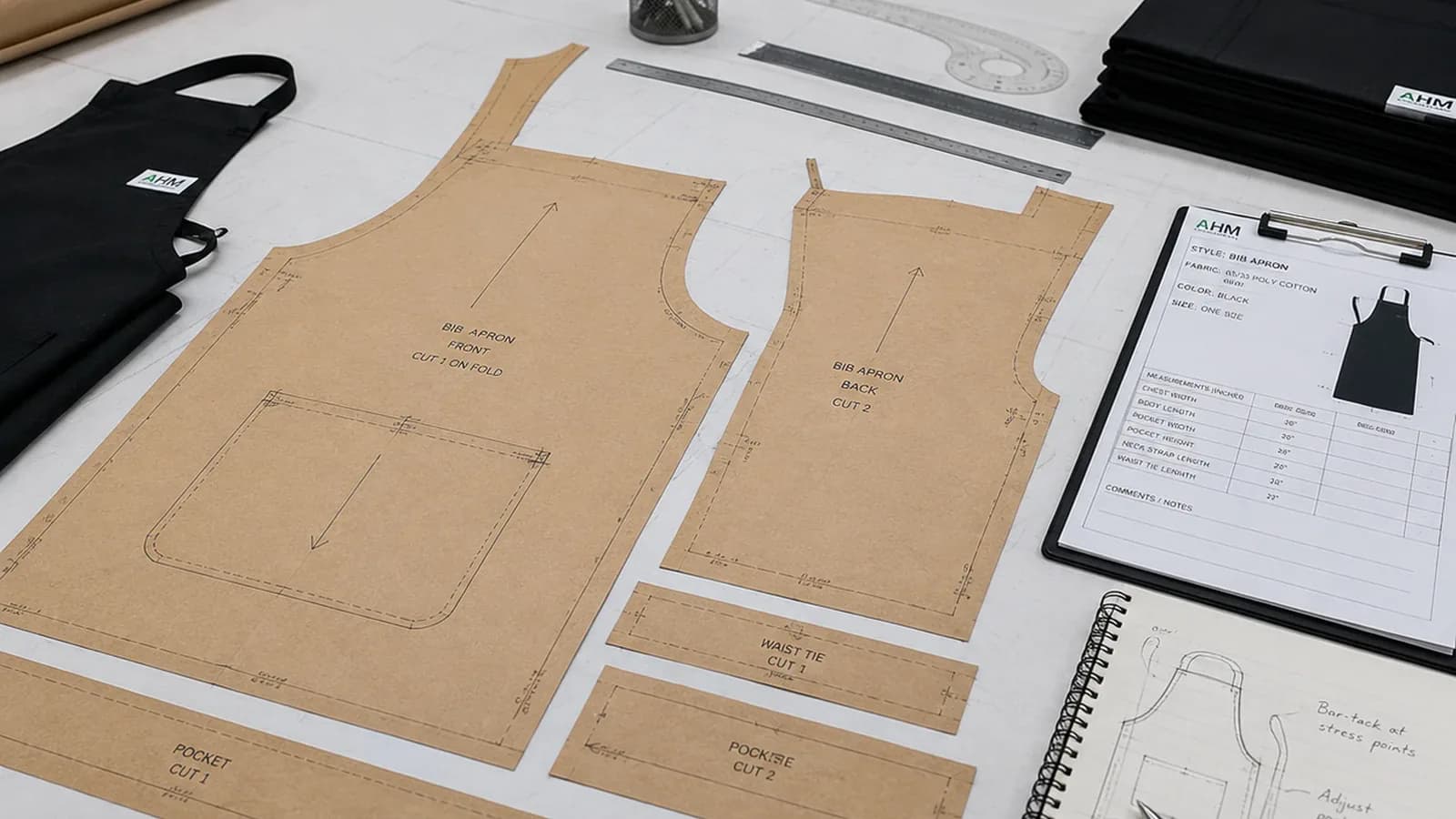
Developed from your size specification or graded from an approved fit sample.
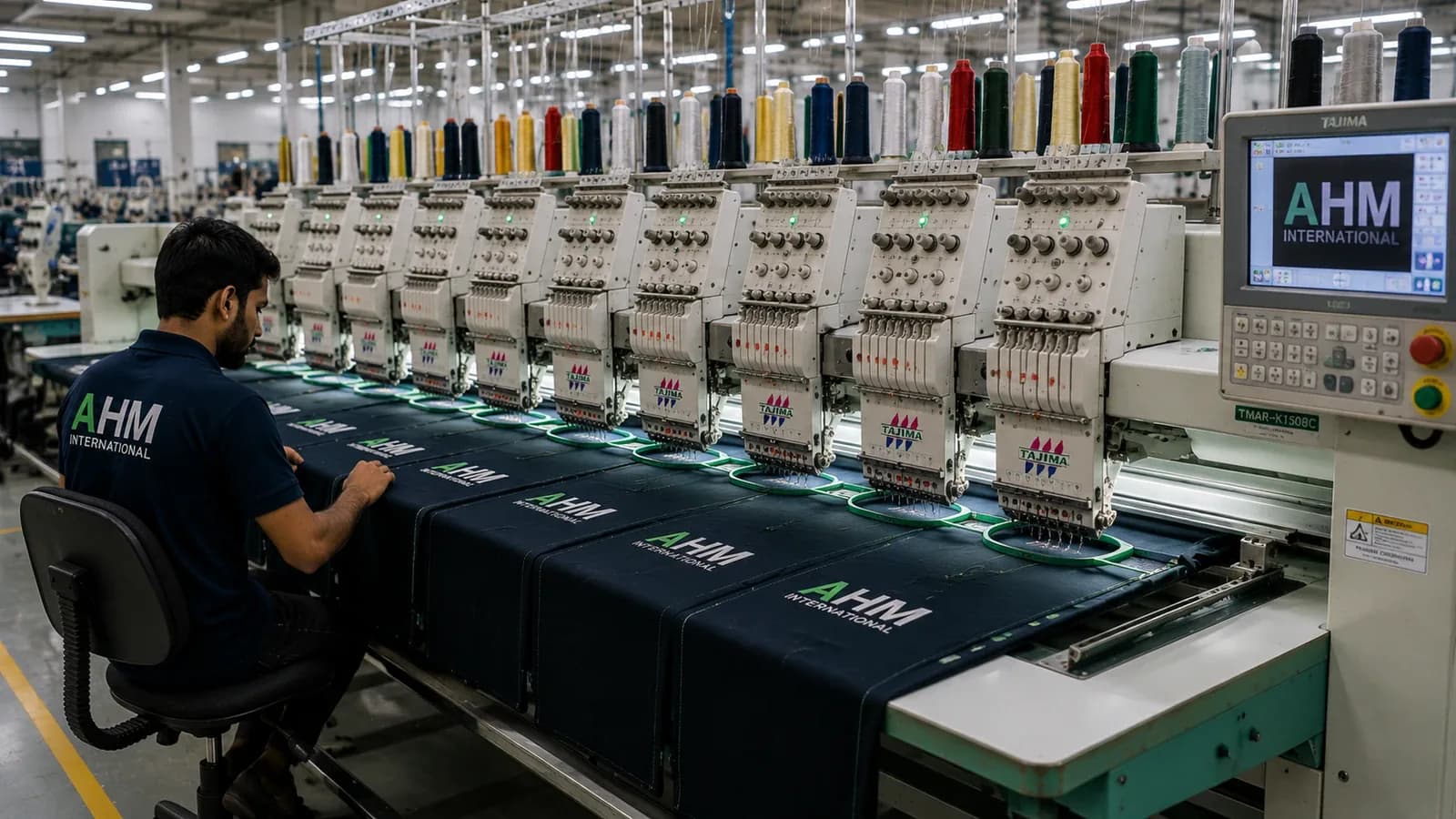
Embroidery digitised and prints struck off, approved before bulk rather than during it.
What a complete apparel tech pack contains. Send what you have. This is what we will be looking for, and what we will ask about if it is missing.
Most enquiries do not arrive with one, and it is not a barrier. A reference garment is often better: it answers construction questions a written specification usually leaves open, and it can be measured directly.
A sketch with written notes also works. What matters is that the requirement is clear enough for us to know what we are quoting, and where it is not, we ask rather than assume, because an assumption becomes a cost you did not agree to.
Where you have no starting document at all, we can document a garment you currently buy and develop from that. The output is a specification you own, rather than a dependency on someone else's article.
What we most often have to ask about. Worth checking before you send.
Buyer questions
It depends on the article, whether the fabric is in stock or has to be developed, and how resolved the specification is when it arrives. A complete tech pack with an available fabric moves considerably faster than a sketch requiring a fabric development. We confirm timing against your specification rather than quote a standard figure.
Development and sampling costs depend on the article, the materials and the work involved, and are confirmed in writing with the quotation. We do not publish a standard figure, because for most enquiries it would be wrong.
As few as the specification allows. Each round is produced against a written comment sheet so it closes specific points rather than restarting the conversation. A resolved specification typically needs fewer rounds than an open one.
Yes, if you want them. There is a checkbox for it on the quote form. Where a specified fabric or construction is likely to price above your target, we present the alternatives alongside the original rather than quoting the specification and waiting for the quotation to be rejected.
Send a tech pack, a reference garment, a sketch or a written requirement. We will tell you what is missing before we quote.
Explore next
Product development stage
Detail, outputs and what usually goes wrong.
Sampling process
Proto, fit, size set and pre-production samples.
Materials and fabric selection
Construction families, typical weights and finishes.
Tech Pack Checklist for Apparel Buyers
A complete apparel tech pack contains a technical sketch, a bill of materials, a measurement chart with tolerances, construction notes, a fabric specification, a colour standard, decoration artwork, labelling requirements and a packing instruction.
The Apparel Sampling Process Explained
An apparel program normally runs through four sample types.
Why Polyester Is Hard to Dye — Buyer Guide
Polyester is hydrophobic and highly crystalline, so colour is typically carried with disperse dyes under heat and pressure rather than with the routes used for cotton.