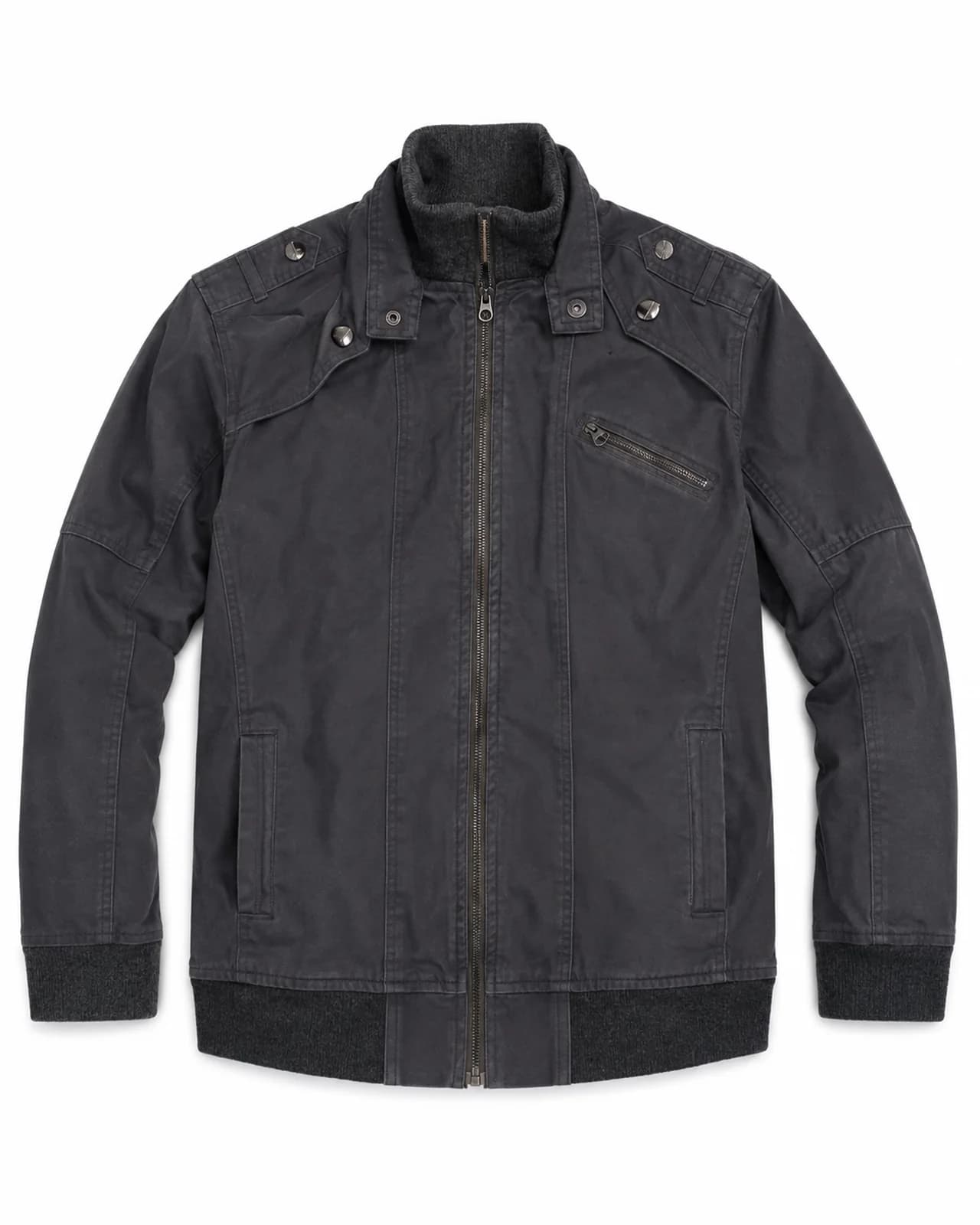
Manufacturing
From the first review of your specification to handover on board at Port Qasim. Each stage below has a defined output and a point where you approve something, and each page names what usually goes wrong there.
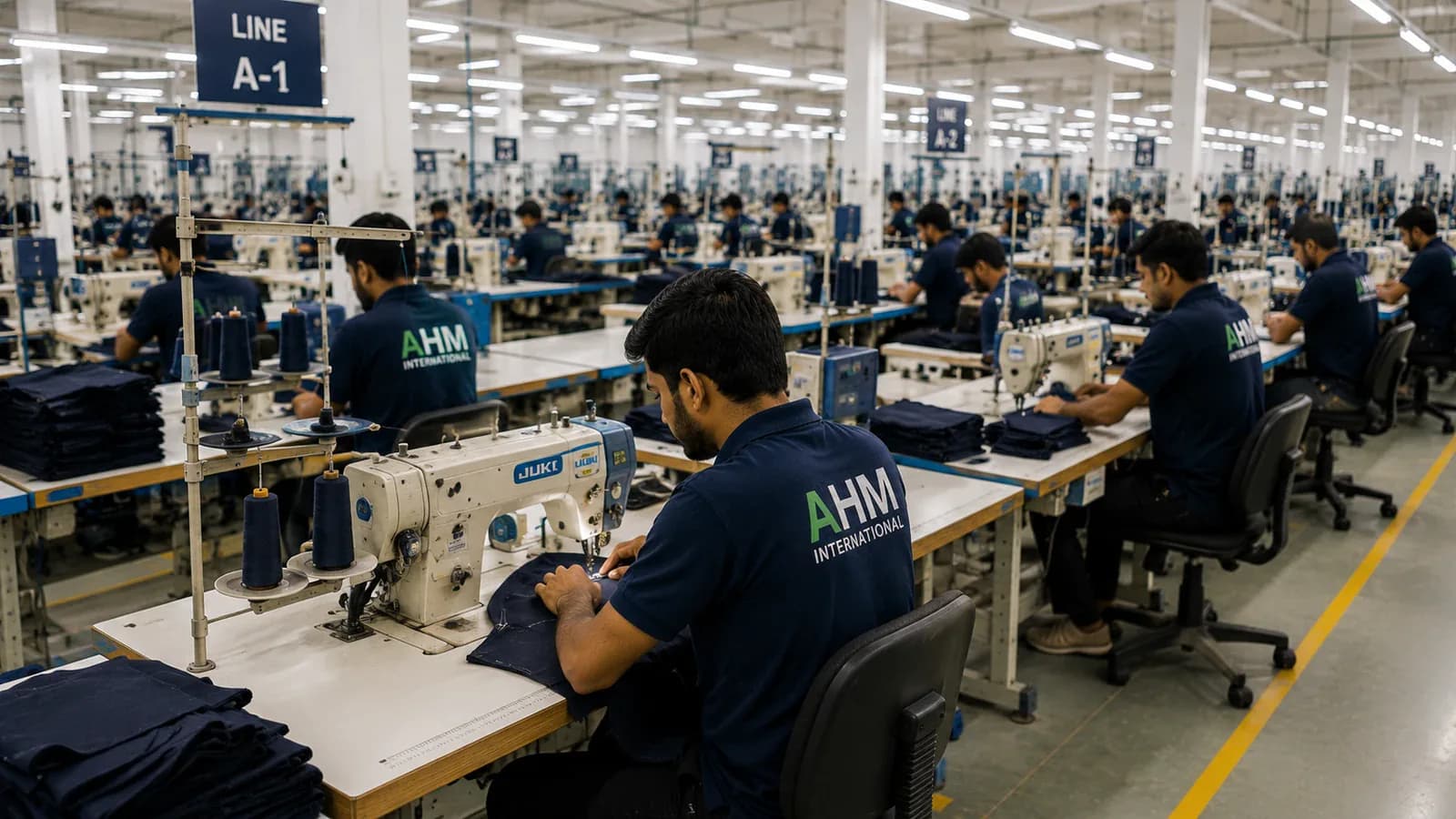
The nine stages
Read it in order. Each stage names what you receive and the failure that stage is prone to, because the point where a program stalls is almost always the point nobody was watching.
- 01
Product Development
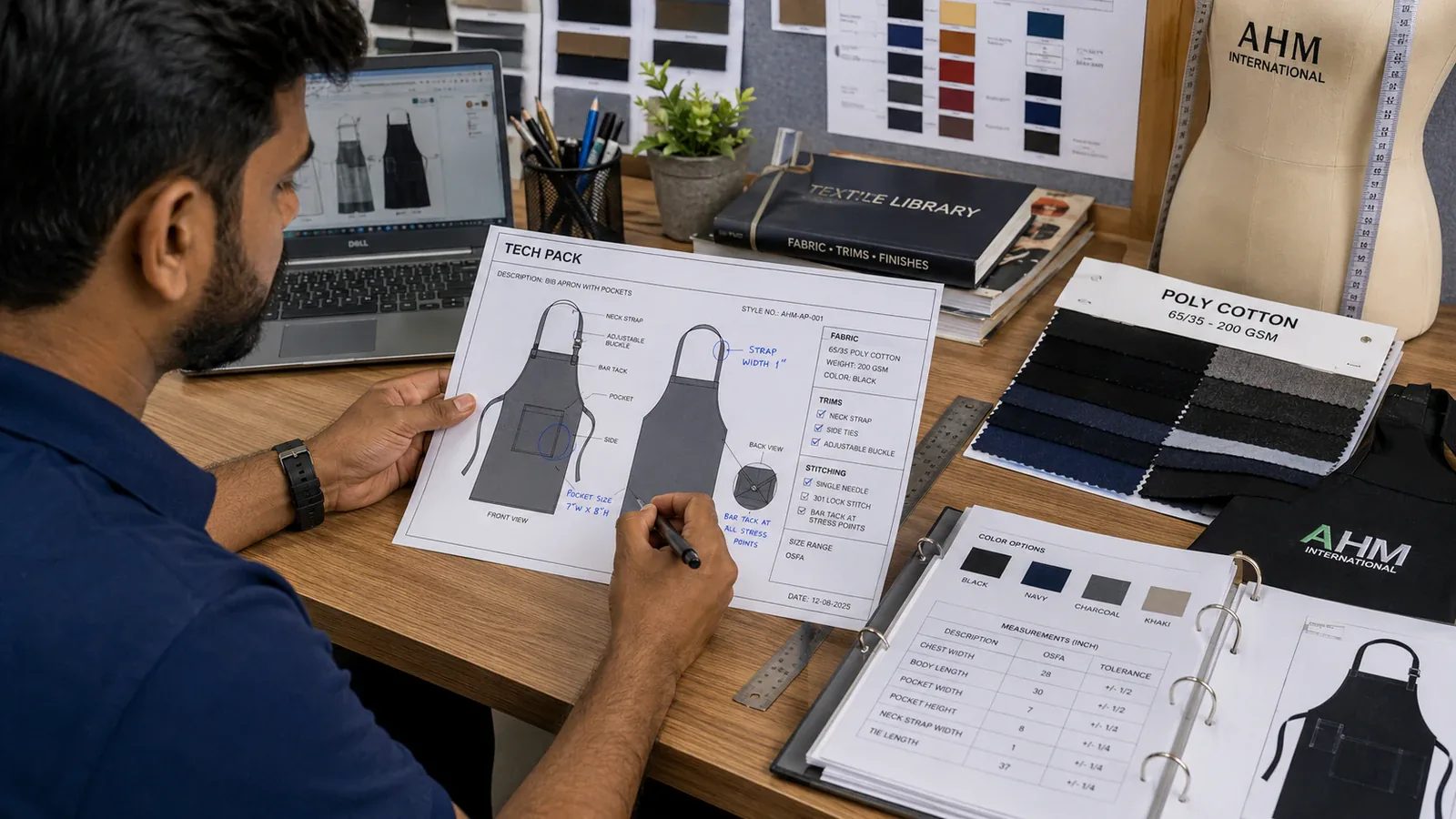
Development turns a reference garment, a sketch or a tech pack into a manufacturing specification the factory floor and your QA can both read the same way. Almost every avoidable cost in an apparel order is created or prevented here.
- You receive
- Construction specification
- What usually goes wrong
- The tech pack leaves construction open, so the factory quotes defensively.
- 02
Fabric Sourcing
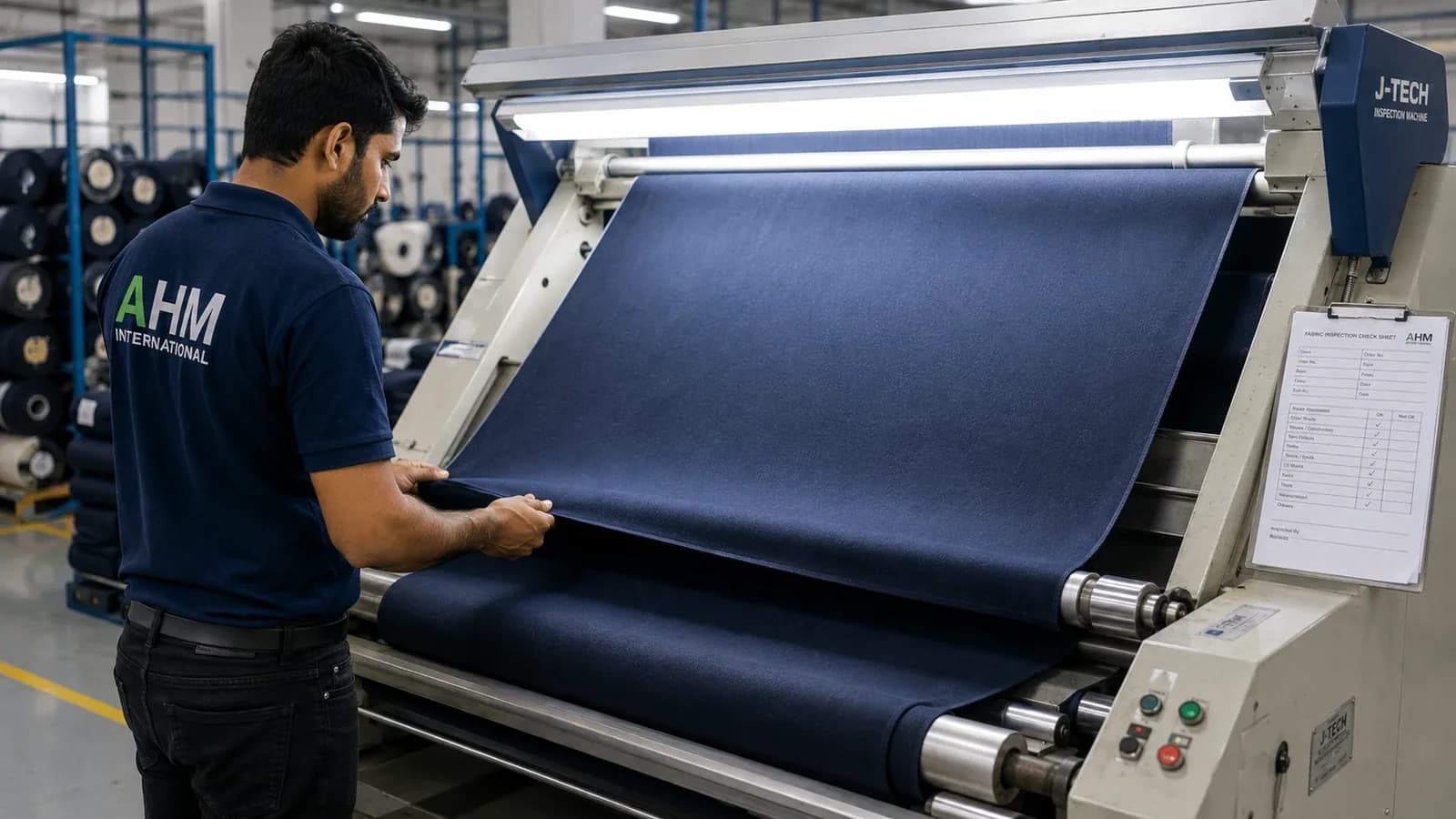
Fabric is usually the largest single line in an apparel cost and the hardest thing to change once a program is running. Sourcing it against the actual requirement, rather than against the nearest available roll, is what makes a reorder behave like the first shipment.
- You receive
- Fabric options with commercial implications
- What usually goes wrong
- Colour is approved on a swatch and then drifts across bulk lots.
- 03
Sampling
Sampling is where the specification is proven. Rounds that close specific written points converge; rounds that restart the conversation do not. Each sample AHM produces is made against a comment sheet, so approval moves forward instead of circling.
- You receive
- Proto, fit, size set and pre-production samples
- What usually goes wrong
- Comments are given verbally, so the next sample addresses a different interpretation.
- 04
Cut & Sew
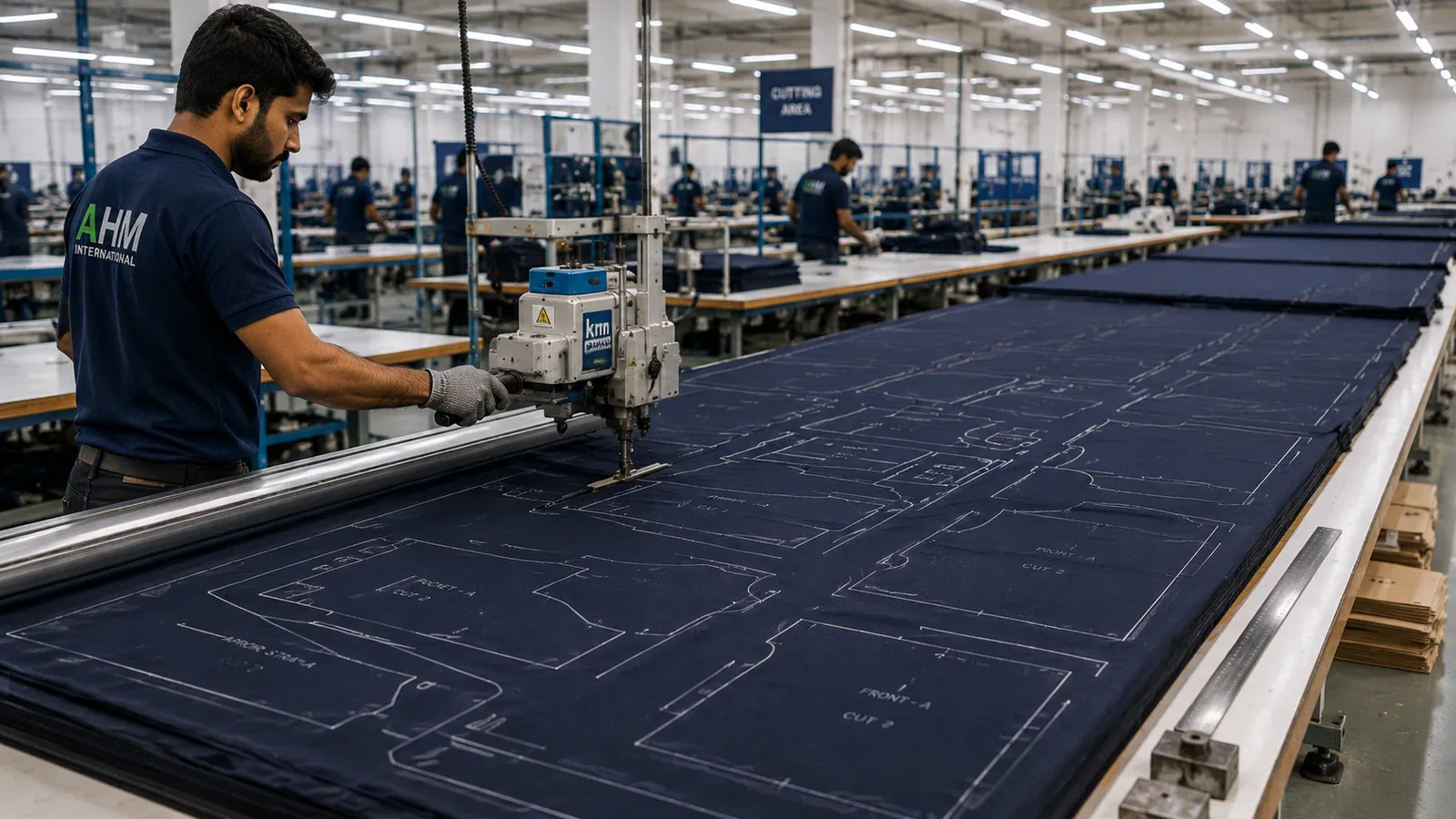
Cutting decides fabric consumption, which decides a large part of the FOB price. Assembly decides whether the garment matches the sealed sample. Both are run against approved documents rather than against habit.
- You receive
- Cut panels bundled by size and shade
- What usually goes wrong
- Panels from different shade lots are assembled into one garment, and the sleeve does not match the body.
- 05
Screen Printing
A placement print has to survive the program's wash cycle and look identical on the last garment as on the first. Print type is selected against the fabric rather than applied uniformly, and it is approved on the bulk substrate before production.
- You receive
- Approved strike-off
- What usually goes wrong
- The print is approved on a swatch and behaves differently on the bulk fabric.
- 06
Embroidery
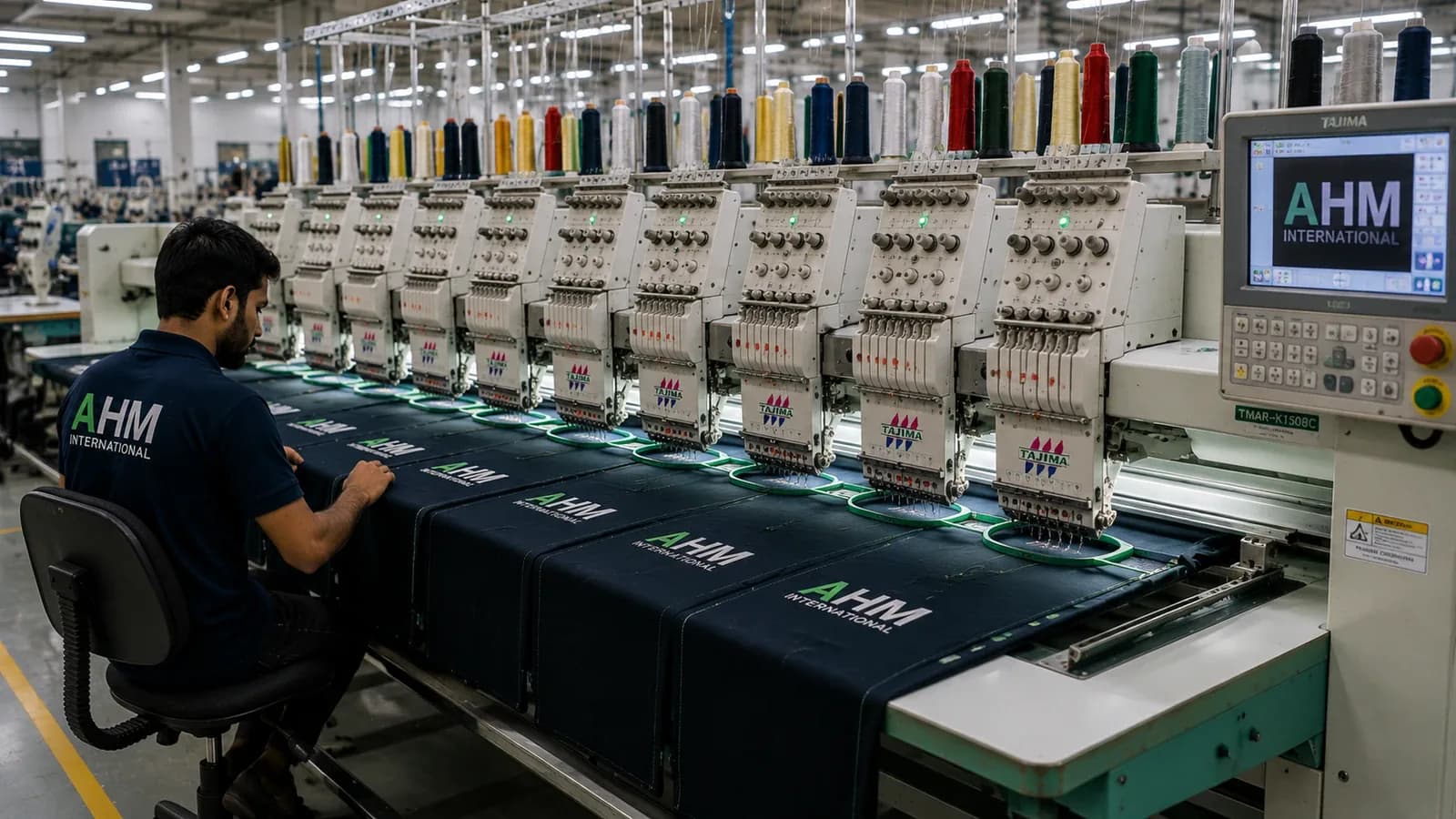
In a uniform program the same mark has to reproduce identically on pique, on fleece and on woven twill. Three substrates that behave differently under a needle. Digitising and backing are selected per fabric, and a sew-out is approved before bulk.
- You receive
- Digitised stitch file
- What usually goes wrong
- A logo digitised for woven fabric is run on fleece and sinks into the pile.
- 07
Quality Control
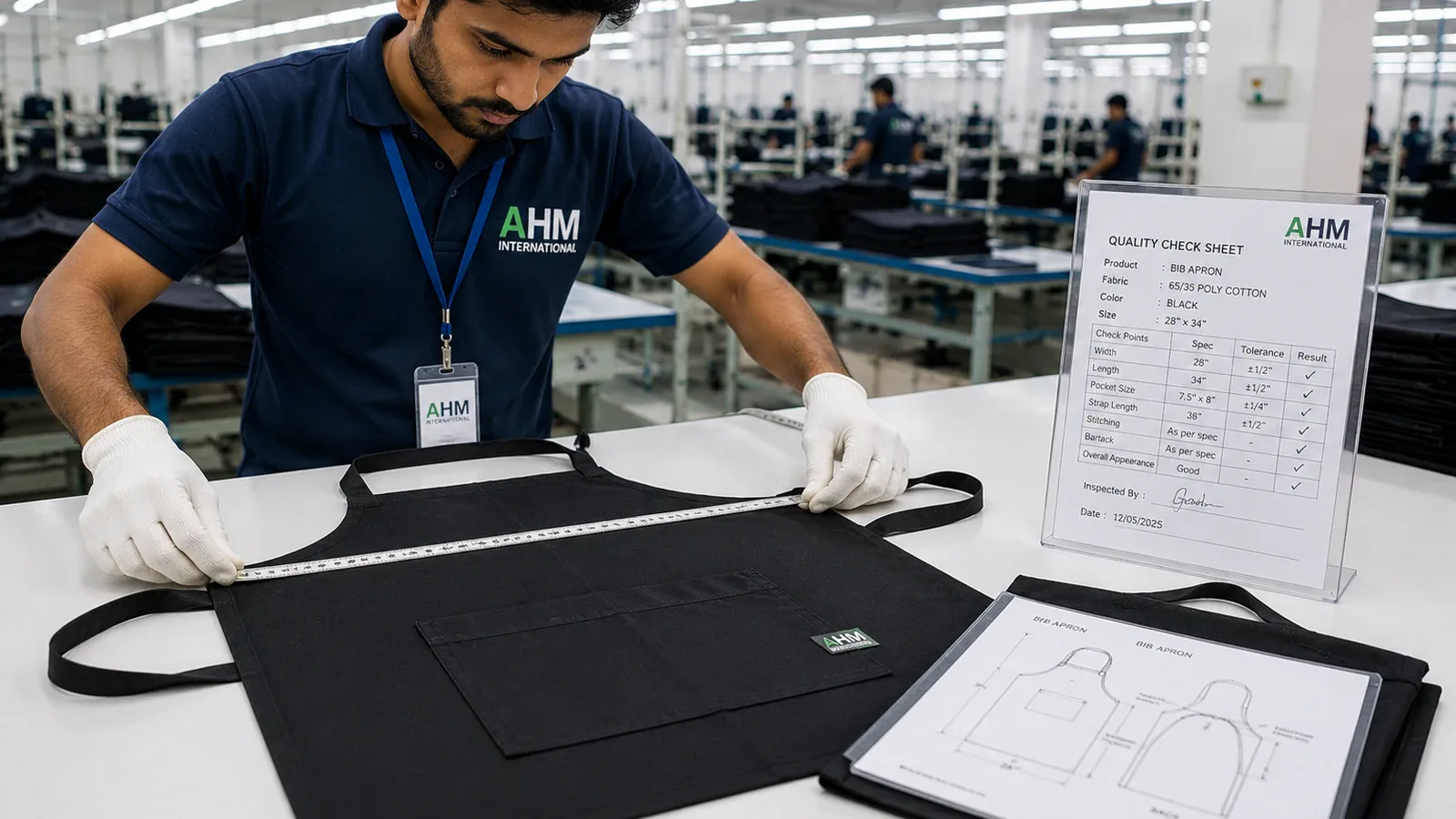
Quality control that only happens at the end can reject a shipment but cannot save one. Inspection at AHM runs across incoming material, pre-production, inline assembly, measurement, finishing and packing. The points where a problem is still correctable.
- You receive
- Inspection records at each stage
- What usually goes wrong
- A defect class is disputed at final inspection because no standard was agreed.
- 08
Packing
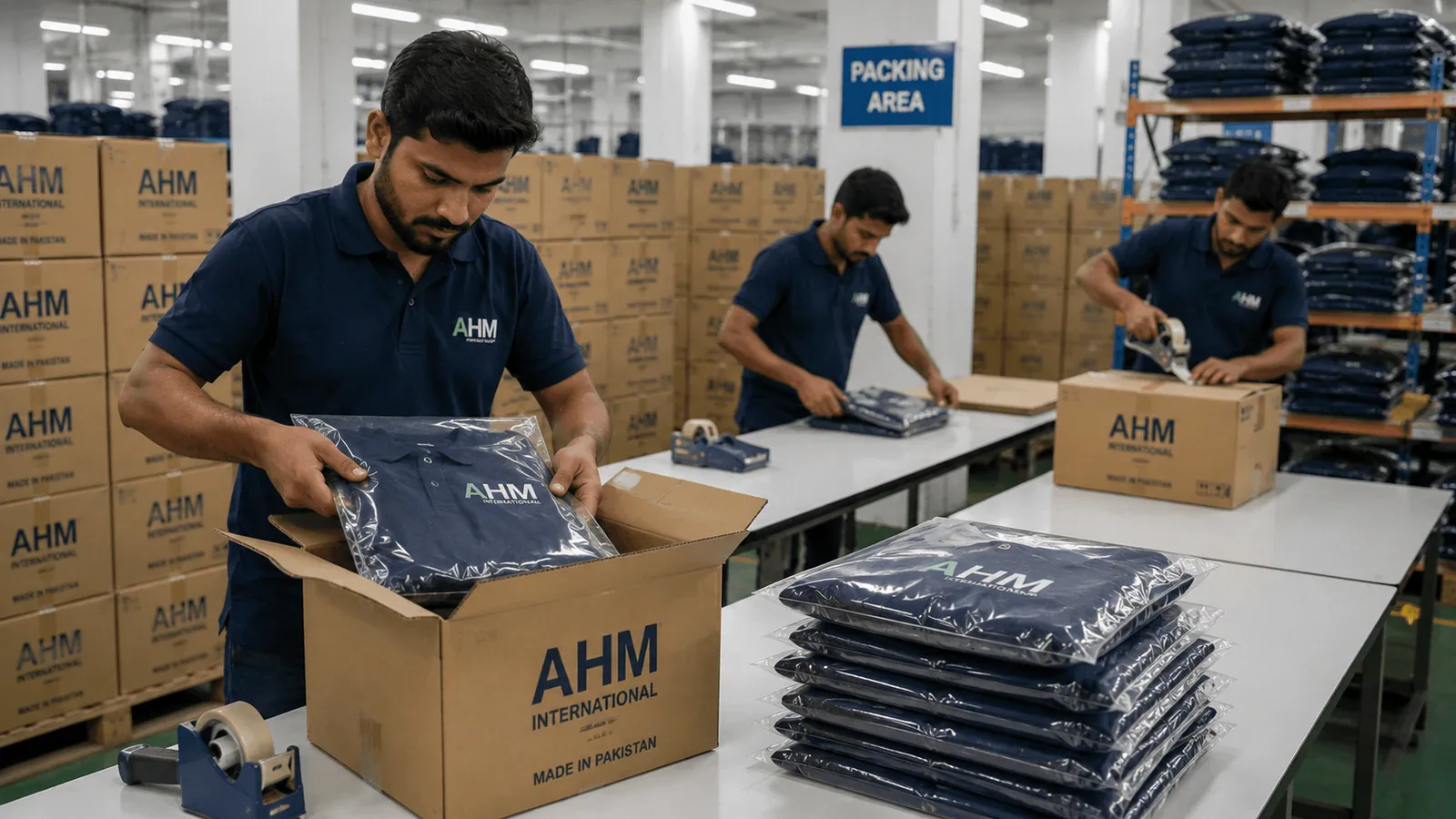
Packing is where an otherwise correct order gets rejected at a distribution centre. Assortment, ratio, labelling and carton marking are specified before production and verified before sealing.
- You receive
- Packed and marked cartons
- What usually goes wrong
- The carton contents do not match the packing list and the DC rejects the delivery.
- 09
FOB Export
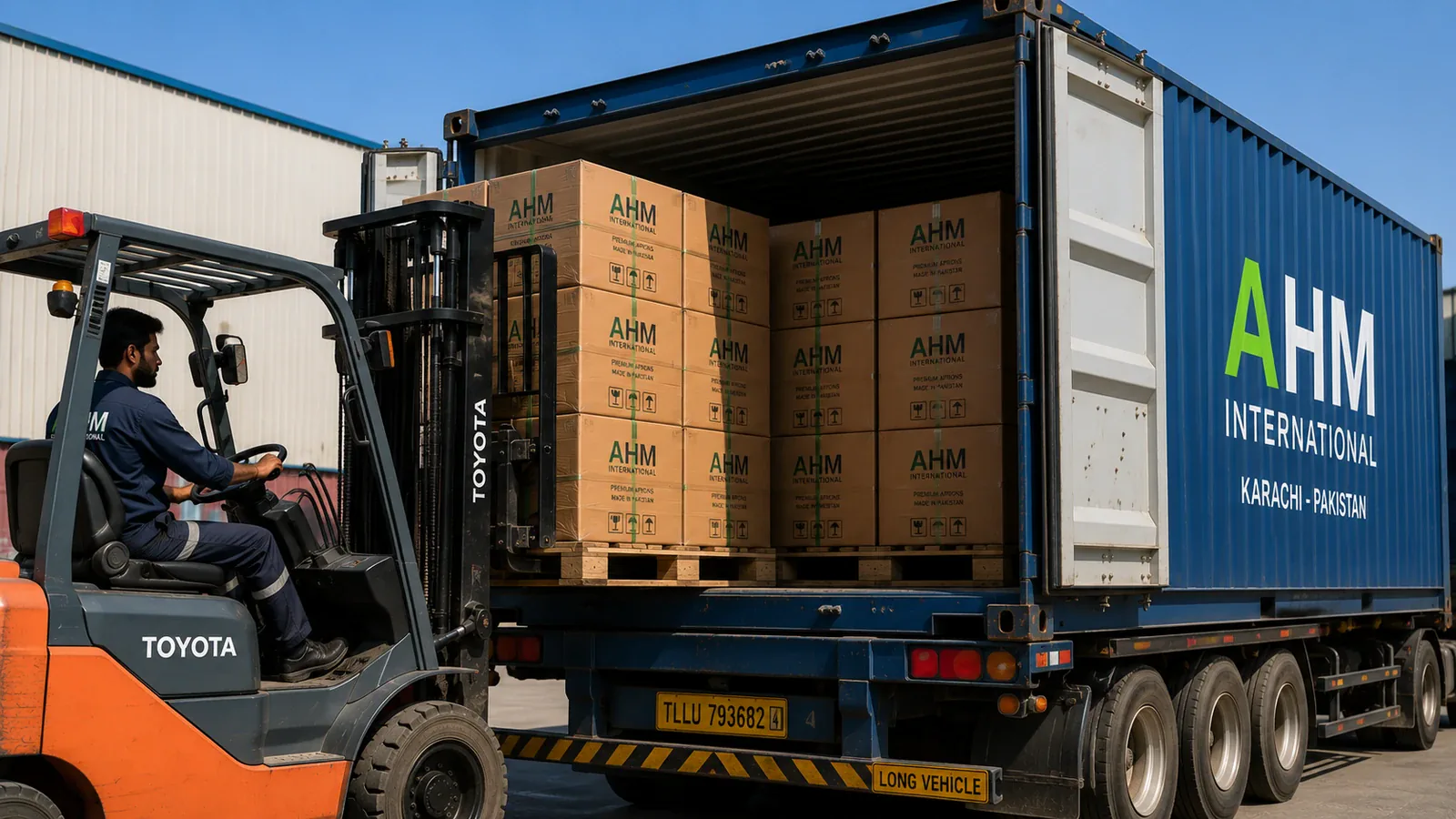
AHM International has documented FOB apparel export experience from Port Qasim, Karachi to the United States. FOB means responsibility transfers to you once the goods are on board, and everything up to that point is ours.
- You receive
- Commercial invoice and packing list
- What usually goes wrong
- Documentation does not match the physical shipment and clearance is delayed.
The full workflow
Twenty-six stages, and who owns each one.
The stages above are the shape of a program. This is the whole of it, in order, including what you are asked for at each point.
- 01
Buyer Inquiry
The enquiry is read by someone who can judge whether AHM is the right factory for it, and says so if it is not.
You provideThe style, the quantity and the market it is for
You receiveA direct answer on fit, and the questions that matter
- 02
Tech Pack / Reference
The specification, reference garment or sketch is reviewed in detail.
You provideTech pack, reference garment, sketch or written requirement
You receiveA list of gaps and ambiguities, before they become a failed sample
- 03
Requirement Review
Construction, finish and performance requirements are agreed in writing.
You provideDecisions on the open points raised
You receiveAn agreed requirement document
- 04
Fabric Review
Materials are matched to the requirement, with the commercial consequence of each option attached.
You provideApproval of direction, or a nominated mill
You receiveFabric options with weight, composition and hand feel
- 05
Trim Review
Components are specified or matched against a nomination.
You provideNominations where you have them
You receiveA trim card against the requirement
- 06
Commercial Costing
FOB costing is built against the confirmed construction, materials, decoration, packing and quantity.
You provideQuantity, destination and target price if you have one
You receiveAn FOB cost with its assumptions stated
26 stages, six phases. Every one of them either produces something you can inspect or asks you for something — there is no stage where the program is simply in progress.
Operating model
- Commercial model
- FOB. Goods are delivered on board at Port Qasim, Karachi, and freight and insurance from that point are the buyer's responsibility.
- Production capacity
- Not published. We confirm feasibility against your quantity, article and schedule during commercial discussion rather than advertising a figure.
- Certifications
- Certification status is confirmed in writing during commercial discussion. We do not display accreditations we cannot evidence with a certificate.
- Minimum quantity and lead time
- Confirmed once the article, fabric and colour count are reviewed. Fabric is usually the constraint, not the stitching.
- Documented export experience
- FOB apparel export from Port Qasim, Karachi to the United States.
A single style is enough to see how the process runs. We review it and come back with construction, materials and commercial FOB costing.
Explore next
Explore next
Quality assurance process
Where inspection happens and what is checked at each stage.
Materials and fabric selection
Construction families, typical weights, finishes and applications.
FOB export from Port Qasim
Documentation, packing, carton marking and handover.
Carton Marking for Apparel Orders
An apparel export carton normally carries shipping marks on one face and side marks on an adjacent face: buyer name or code, purchase order reference, style, colour, size or ratio, carton number in sequence, quantity, and gross and net weight.