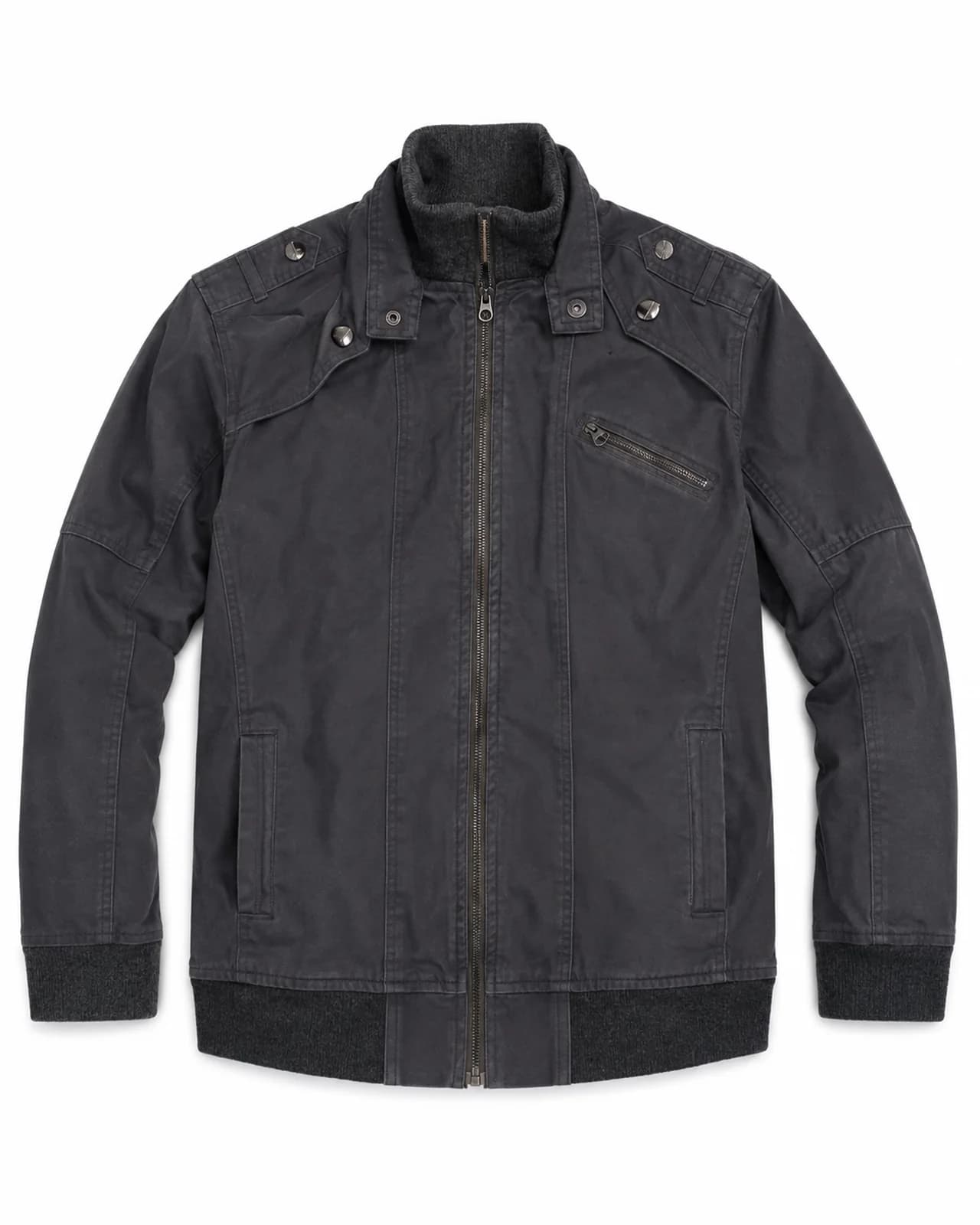
Manufacturing: stage 04 of 9
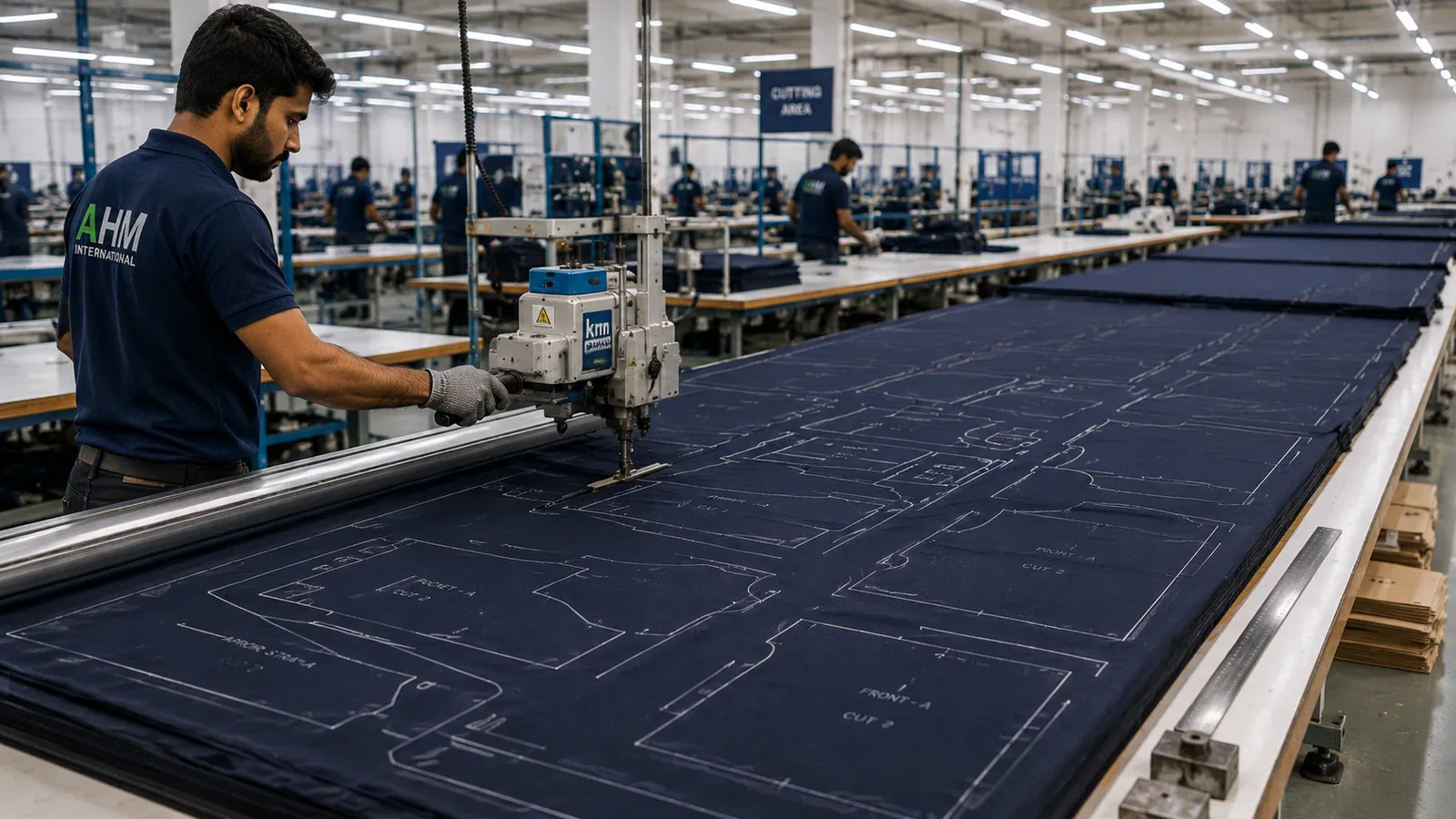
Cutting decides fabric consumption, which decides a large part of the FOB price. Assembly decides whether the garment matches the sealed sample. Both are run against approved documents rather than against habit.
Process
- 01
Fabric is relaxed and inspected before laying, so shrinkage and defects are known.
- 02
The lay is cut to a digitised marker, and consumption is calculated from the real marker rather than estimated.
- 03
Cut panels are bundled and ticketed by size and shade lot to protect shade continuity.
- 04
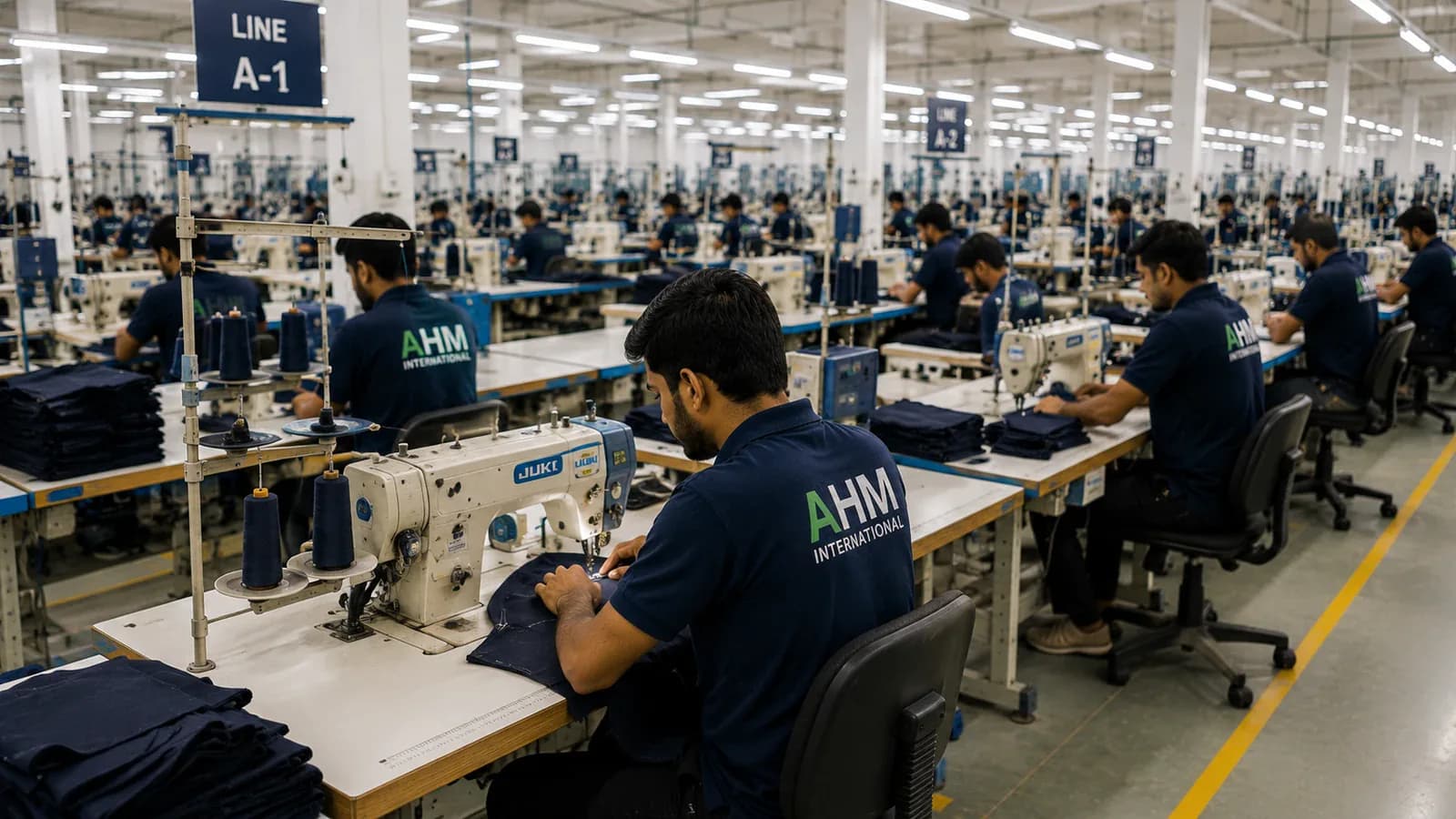
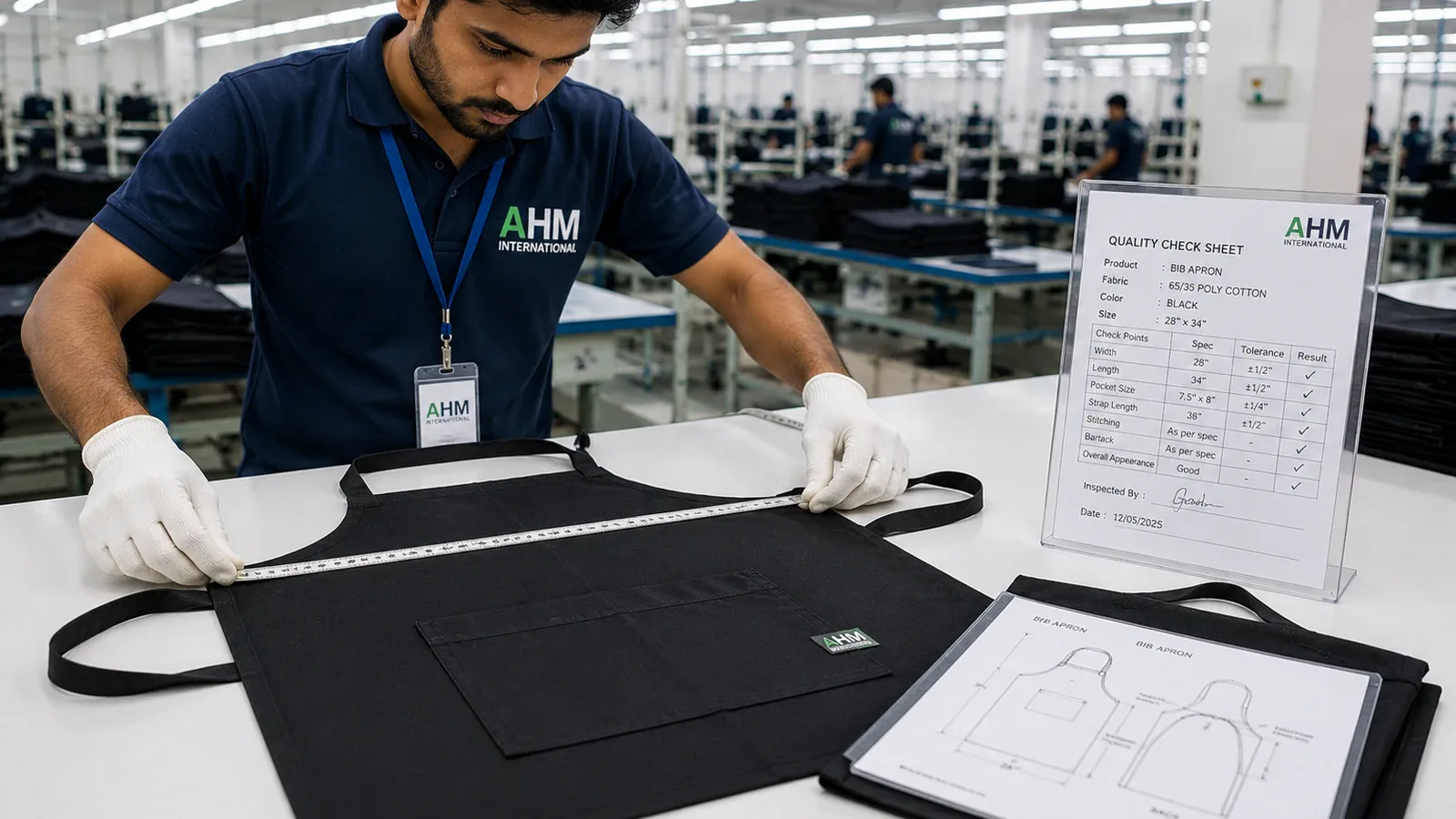
Assembly runs to the approved construction. Seam type, stitch density, thread and needle specification.
- 05
Inline checks run at defined operations so a construction problem is caught while the batch can still be corrected.
What you supply
- Approved sealed sample
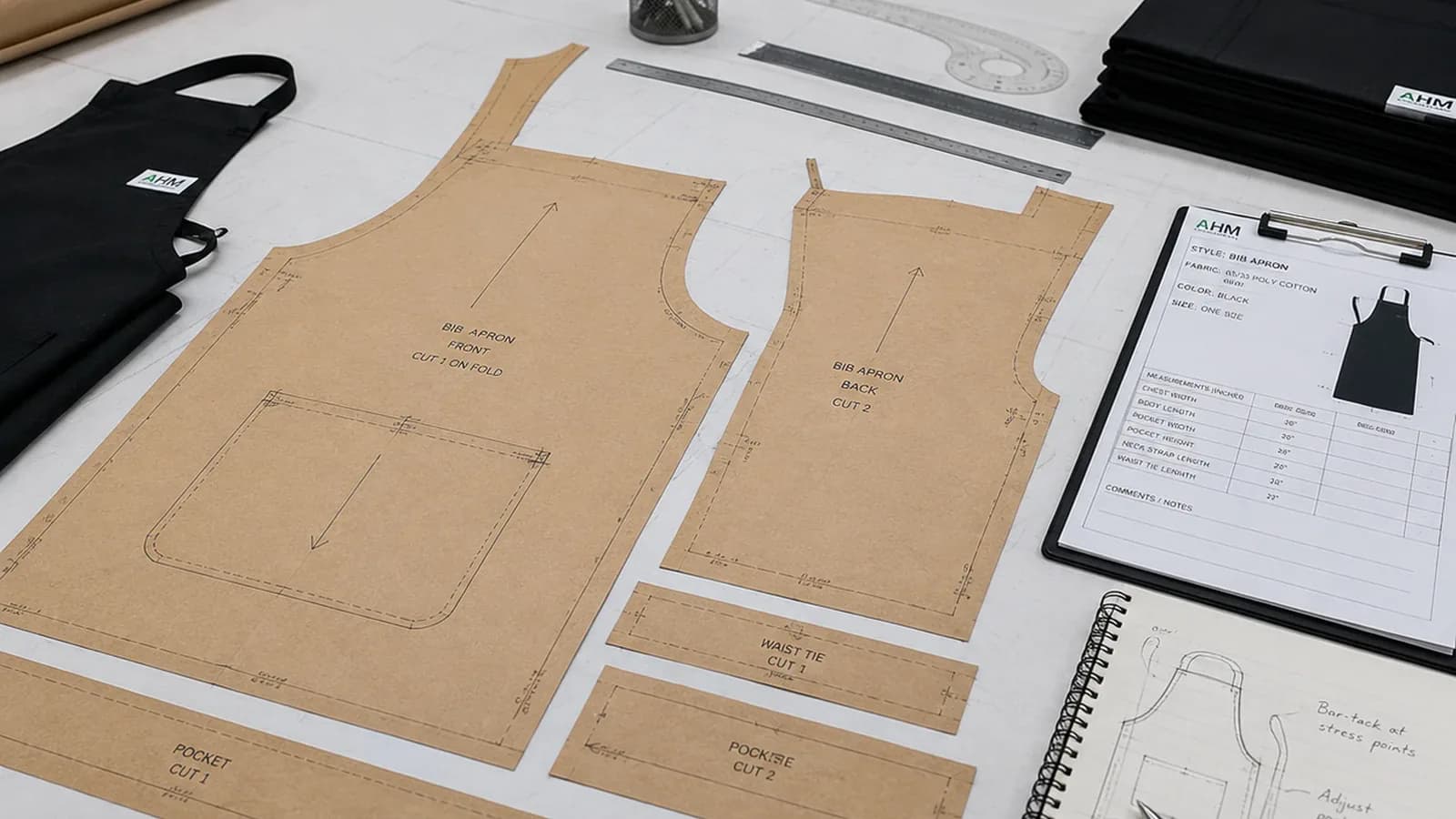
- Approved measurement chart with tolerance
- Colour and size ratio breakdown
What you receive
- Cut panels bundled by size and shade
- Assembled garments to the approved construction
- Inline inspection records
Risk
Every stage has a characteristic failure. Naming it is more useful than claiming it never happens.
Panels from different shade lots are assembled into one garment, and the sleeve does not match the body.
Bundles are ticketed by shade lot at cutting and kept together through assembly.
Consumption is estimated at quotation and the real marker uses more fabric.
Costing is built from the digitised marker, which is why FOB pricing holds through to production.
A construction fault is found at final inspection, when the whole batch is already sewn.
Checks are placed at defined operations during assembly rather than only at the end of the line.
Buyer questions
From the digitised marker for the actual size ratio, not from an average. That is what makes the FOB price hold from quotation through to production.
Whatever the approved construction specifies. Lockstitch, overlock, coverstitch, felled seams, bar tacks. Stitch density and thread are part of the specification rather than a factory default.
Send a specification and we will come back on construction, materials and commercial FOB costing against it.
Other manufacturing stages
Other manufacturing stages
Product Development
Development turns a reference garment, a sketch or a tech pack into a manufacturing specification the factory floor and your QA can both read the same way.
Fabric Sourcing
Fabric is usually the largest single line in an apparel cost and the hardest thing to change once a program is running.
Sampling
Sampling is where the specification is proven.